
Case Studies
The Evidence Behind the Consensus
The Scientific Consensus on Wildlife and Climate has been developed in response to a growing body of research showing that wild animals influence ecological processes that matter for climate mitigation, adaptation, and resilience.
This is not an entirely new area of science. Evidence has been emerging across terrestrial, freshwater, coastal, and marine systems for some time. Studies from different fields and ecosystems increasingly indicate that animals can affect vegetation dynamics, nutrient cycling, carbon processes, disturbance patterns, ecosystem recovery, and resilience. These effects are not identical everywhere, and they are often context-dependent.
But taken together, the literature now supports a clear overarching conclusion that wild animals are not simply passive inhabitants of ecosystems. In many cases, they help shape how ecosystems, and by extension, the climate, functions.

Tiger
If forests currently occupied by tigers lost their tigers, carbon emissions would be 9% higher and carbon removals 28% lower than observed.
.png)
Mesopelagic Fish
Every night, billions of fish migrate through the ocean’s “twilight zone,” helping move carbon from the surface into the deep sea, where it can remain stored for centuries.


Flying foxes
Flying foxes are keystone ecosystem species that provide significant ecosystem and economic contributions through pollination and seed dispersal.

Grey Wolf
Wolves could increase carbon storage across North American boreal forests by the equivalent of removing 33-71 million passenger vehicles from the road each year.
_edited_edited.jpg)
Dugong
By grazing, recycling nutrients and dispersing seeds in seagrass meadows, dugongs can influence the productivity, recovery, connectivity and carbon storage of important coastal blue carbon habitats.

Wildebeest
Grasslands with healthy wildebeest populations store up to 4.4 million more tons of carbon dioxide than when wildebeest populations were at their lowest.

Antarctic Krill
These tiny crustaceans lock at least 20 million tonnes of carbon into the deep ocean every year - rivalling the carbon storage capacity of salt marsh, mangroves and seagrass.
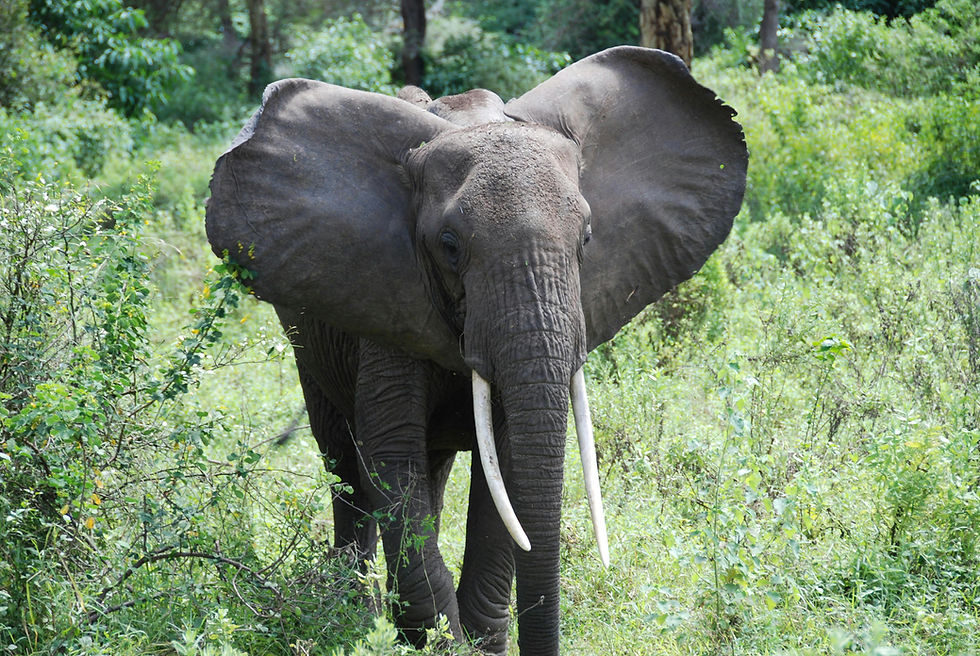
African Forest Elephant
Restoring them within protected areas in Central Africa could increase carbon storage by 13 million tonnes of CO₂ per year.

Hornbill
By dispersing the seeds of large tropical trees, hornbills help maintain the forest communities that support biodiversity, regeneration and long-term carbon storage.

American Alligator
American alligators are associated with higher carbon stocks in wetland ecosystems in their native range in the US.
